Cats vs. Dogs. Boys vs. Girls. Ice vs. Heat, a rivalry as old as time. The casualties?! Your aches and pains! Often people will go to what they feel like, or what they’ve been told in the past. In reality it has more to do with the type of injury your body has suffered. Too often, I have patients come in after a traumatic injury and they were told by a physician that heat would be the best option. I know what your thinking, “get a grip its just ice and heat,” but it’s not! It can mean the difference between starting to feel better before you make a trip in to see your Chiropractor (sly eye raise).
My grandmother is in her late 80’s, and I am proud to say that she is not on any medications. She lives alone, and last year she had a hip replacement. For someone that has not known anyone to have replacements, you should know that your gait, or the way you walk, can become altered when you get new hardware. Earlier this week, she fell and hit her head off of a 3 ft. high TV stand. The fall happened so fast, and the impact was so hard that she crumpled to the floor. A CT scan showed that she had sustained ligament strain in the neck (cervical) and mid back (thoracic) areas. Her doctor put her on muscle relaxants, pain killers, and told her to use heat.
My Grandma started experiencing irritable bowel and extreme fatigue. She was having trouble sleeping because of the pain, but the body heals best when it is asleep. It had become a lose-lose situation and to top it off, she was using heat instead of ice. You have three types of muscle in the body: cardiac (heart), skeletal (my huge biceps), and smooth (digestion). Muscle relaxants do not just target skeletal muscle, they can affect all types of muscles. Pain killers can be especially harmful to your liver and kidneys, the filtration systems of your body. For someone who does not take medication, the start of these powerful drugs can throw the body in shock and cause it to work in overdrive. This can be detrimental to a person, especially when their body is trying to heal.
ALERT: Drugs do not know how to tell the difference between muscle types. People who often are put on these drugs (muscle relaxants, pain killers) will experience a slowed digestive system (constipation, decrease in appetite). What happens to your cardiac musculature when muscle relaxants are introduced? That’s the last thing you want to s-l-o-o-o-o-w-w-w-w down. Am I right?
Let’s think about ice and heat logically. First, you need to understand how inflammation works. Inflammation is a natural process to bring nutrients to an injured area and initiate healing. The components of inflammation are brought to an area through the dilated (wider) blood vessel. The rush of blood to the area will also emit heat, and feel warm to the touch. When the inflammatory response is not “shut down,” it can run rampid leading to prolonged pain, and depending where, arthritic changes in a joint.
Imagine that you stubbed your toe and it becomes swollen, painful, and warm to the touch. That redness/puffy/warm feeling is blood and inflammatory components!
How does the body respond to Ice or Heat?
- Ice – causes vasoconstriction, or narrowing of a blood vessel. Narrowing of the blood vessel decreases the inflammatory response by default. You are still getting nutrients, your body will still heal. However, those inflammatory soldiers will be halted and slowed, giving the rest of your body time to respond.
- Heat – causes vasoconstriction, or widening of the blood vessel. This allows the inflammatory response to happen. Increase in blood supplies, increase in nutrients, increase in inflammation, and an increase in warmth (causing more inflammation). Heat can be most beneficial when relaxing a muscle spasm that is chronic.
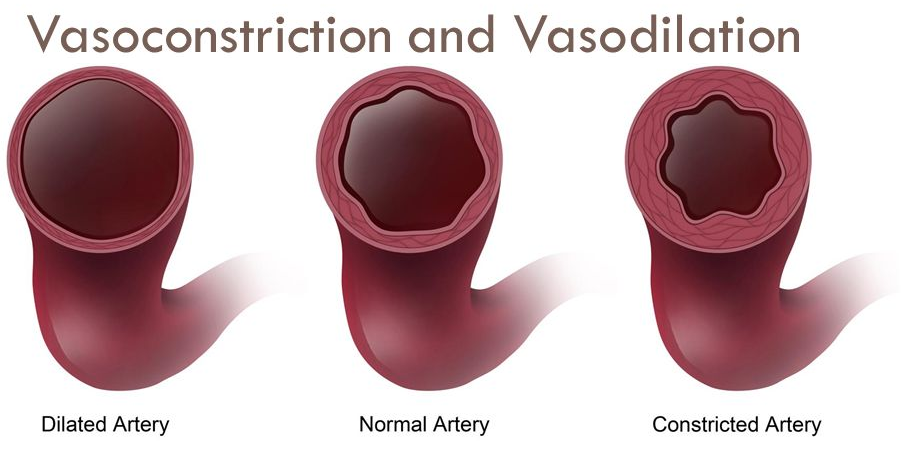
When to Ice? When to Heat?
- Ice (acute) – New injury, or activity induced flare up of old injury. We ice our ankles, knees, elbows, shoulders etc. It is no different for the spine and other regions of the body.
- Heat (chronic)- Old injury that has flared up, without new injury. Used more for muscle relaxation. If you are suffering from cramps during a menstrual cycle, heat would be best to relax the muscle contraction.
Acute Care and Chronic care – Ice or Heat.
Acute Care – First phase of care often defined as the initial incident to about 4 weeks after that, IE 1-4 weeks on average.
Acute/Chronic – The grey area, where you can use either heat or ice depending on the length of relief you get from one versus the other.
Chronic Care – If injury is not address, and bio-mechanical function is not restored, your injury can be long lasting, and linger for months, years, or decades after initial incident.
ALERT: Injuries aren’t always painful. I’ve seen patients who sustained slips, trips, and falls in their childhood create a chronic problem in their adult life.
My grandmother was given false information, and was not getting any better, yet she did not want to stray from what her physician told her. The heat in combination with drugs, which weren’t working, prolonged her pain. I have always used this ice vs. heat logic when it comes to myself, my family, and my patients. If your doc is recommending something else, ask them why, and make an empowered decision.
 Dr. Sara Trefnoff
Leave a comment